
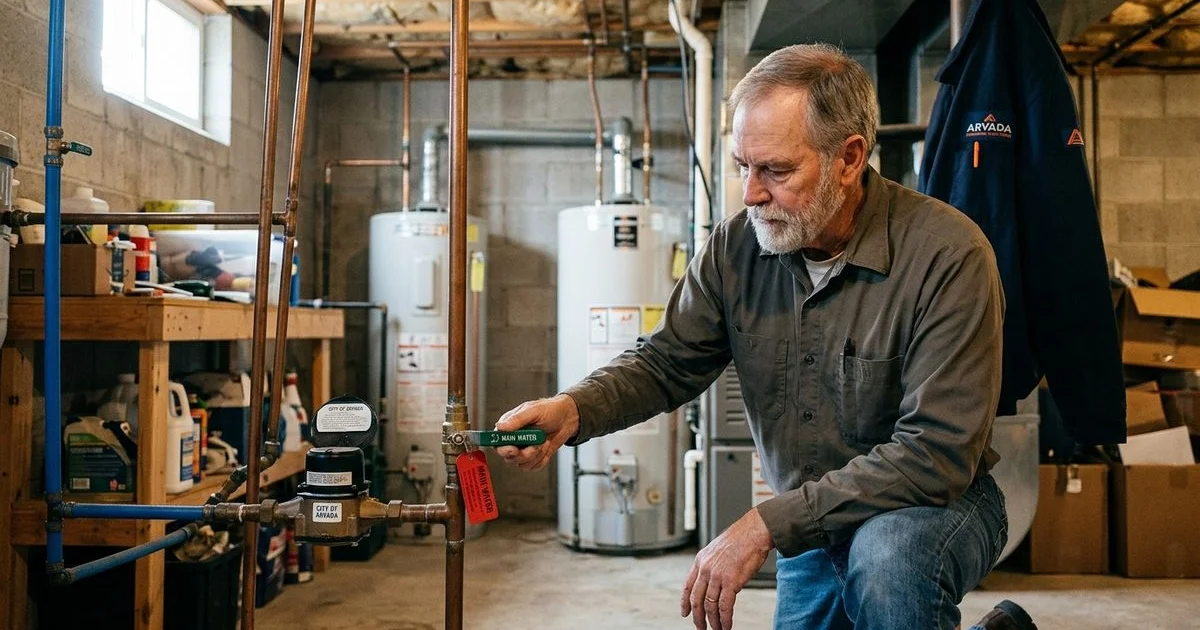
Find it before you need it
We at Arvada Pro Plumbing receive frantic calls every winter from homeowners watching a burst pipe flood their basement. A standard half-inch pipe can leak up to 50 gallons per minute, which is why knowing how to shut off water main lines quickly is critical.
The average cost of water damage restoration from a burst pipe in the US now ranges between $3,800 and $5,500.
Our emergency plumbing line often opens by helping callers locate this specific handle. Finding your main valve ahead of time prevents those massive repair bills. Doing this simple task in advance saves precious minutes.
Where the shutoff is in most Arvada homes
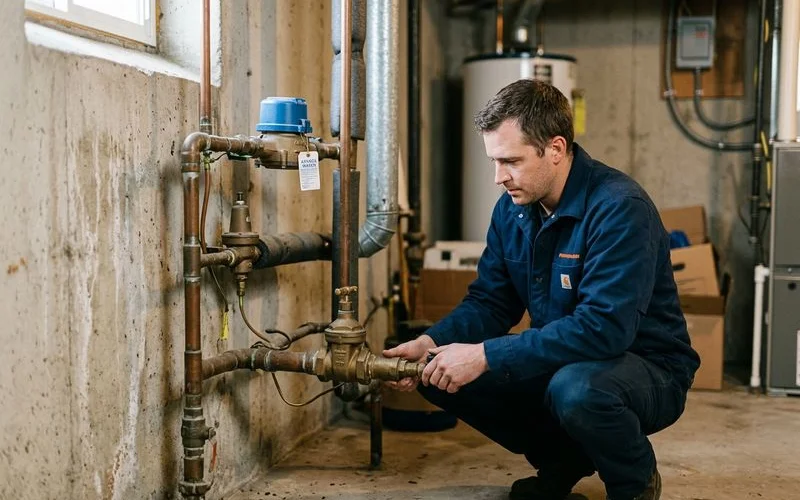
We always tell customers that Arvada water mains are installed inside the house to prevent freezing. The supply line typically enters from the meter or street directly into a heated space. You should check these common locations first:
- Basement: Look near the front wall or the street-facing wall, often close to the water heater or the spot where the supply line comes up through the floor.
- Utility room: Check near the water heater on a slab-on-grade home.
- Crawl space: Inspect the area just inside the access opening on the street-facing side.
- Garage: Search the walls on homes where the water line enters via the garage structure.
- Closet: Look inside closets along an exterior wall, especially in older homes.
Our technicians suggest looking for a vertical or horizontal pipe coming through the foundation wall. This pipe is usually copper, modern PEX, or older galvanized steel. The valve always sits upstream of any branching that goes off to your fixtures.
Identifying the valve type
We want you to be familiar with the two main valve types found in residential plumbing. Knowing which one you have helps you react faster. Each style requires a different technique to close completely.
Ball valve (modern)
Our plumbing teams highly recommend ball valves because they feature a single lever handle for instant control. Water flows freely when the handle is aligned directly with the pipe. Rotating the lever 90 degrees completely shuts the system off.
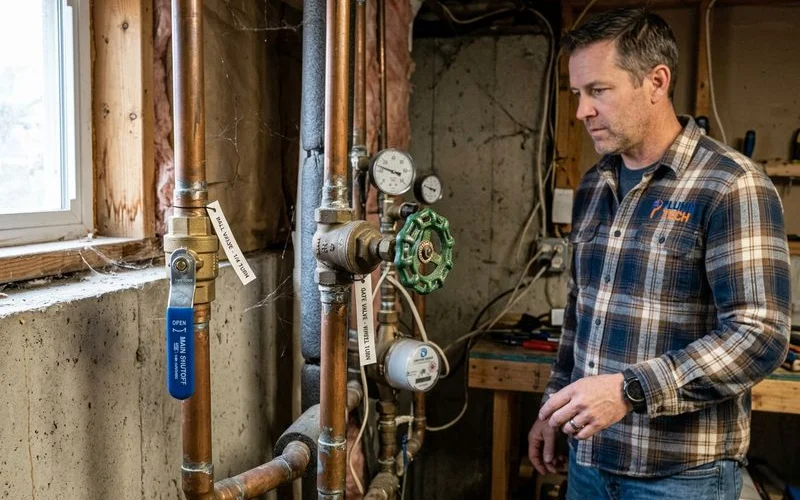
We prefer installing ball valves because they use internal PTFE seats that resist hard water scale. They are incredibly quick and require just one easy quarter-turn. A high-quality brass fixture easily lasts 10 to 15 years without seizing.
Gate valve (older)
Our crews frequently replace gate valves because this older style utilizes a round wheel handle that you must turn clockwise multiple rotations to close. Gate valves lower a metal wedge into the pipe to stop the flow. Hard water minerals naturally trap on this wedge, causing frequent failures in just 5 to 7 years.
We frequently see older gate valves become stiff or completely stuck from years of disuse. If your handle is hard to turn or never closes fully, you need to replace it. Taking care of this upgrade before an emergency strikes is always the smartest move.
How to shut off water main
We know that panic sets in quickly during a severe leak. Following a clear procedure will help you secure your property safely. Follow these steps to stop the flood:
- Locate the valve: Go straight to the location you identified earlier.
- Turn it off: Rotate a ball valve lever 90 degrees or spin a gate valve wheel clockwise until it completely stops.
- Drain the pressure: Open a hot and cold faucet anywhere in the house to empty the lines.
- Test the seal: Wait for the running water to stop entirely.
Our experts warn that if water does not stop after the faucet drains, the valve is failing. You must call the water utility company immediately to report a stop water emergency. A technician will need to turn off the supply from the street.
What if the main valve does not work
We often encounter homes with a main water shutoff that has not been touched in 20 years. Gate valves are especially vulnerable to age and neglect. They can present several dangerous problems during a crisis:
- Rust and mineral buildup can make the wheel impossible to turn by hand.
- The internal components can fail, allowing the wheel to turn fully without actually stopping the water.
- The stem can snap completely when forced with a wrench.
Our technicians teach customers that your second option is the curb stop valve at the street. The City of Arvada water utility owns and operates this specific access point. You can call their after-hours emergency line at 720-898-7070 to request a shutdown at the curb.
We strongly suggest replacing a broken main shutoff with a modern ball valve once the disaster is resolved. A working main valve is one of the highest-value small plumbing upgrades you can invest in. It provides immediate protection for your entire home.
A small habit that pays off
We advise homeowners to open and close their main shutoff briefly twice a year. Daylight saving time provides a perfect prompt to perform this quick maintenance task. This simple action keeps the valve from seizing through long periods of disuse.
| Plumbing Choice | Estimated Cost | Long-Term Impact |
|---|---|---|
| Ignoring a stuck gate valve | $3,800 to $5,500 | High risk of severe water damage during a pipe burst. |
| Upgrading to a ball valve | $200 to $400 | Instant control and peace of mind for the next two decades. |
Our plumbing teams can easily swap a gritty, stubborn handle for a reliable ball valve. The installation typically costs between $200 and $400, giving you a dependable five-second shutoff for the next 20 years. Learning how to shut off water main systems today will protect your property tomorrow.
Our complete what to do before the plumber arrives guide provides a broader checklist of steps to take during a leak.