
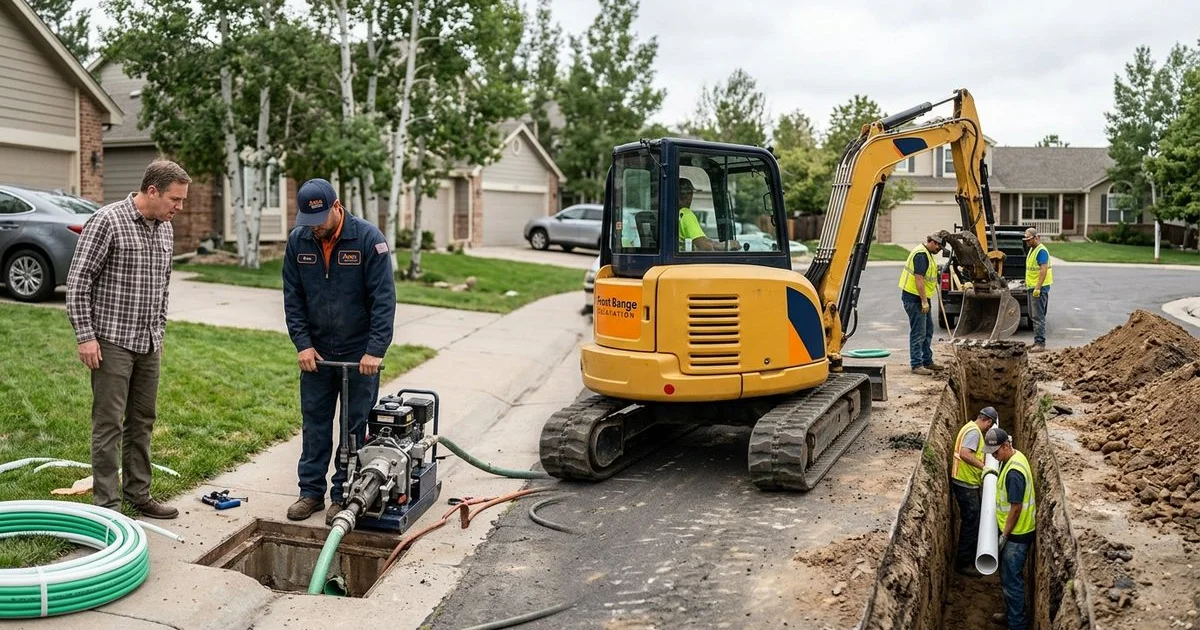
Two paths to the same goal
From what I have seen over the years, the decision between trenchless sewer repair vs excavation dictates the entire trajectory of your plumbing project. Both methods end with a working sewer line. The real difference is how the crew gets there and what your property looks like along the way.
We know that for most Arvada homeowners, the right path depends on pipe condition, yard layout, and your specific budget. Before jumping into any project, a proper sewer line repair always starts with a camera inspection.
Getting accurate video footage is the only way to quote either approach correctly.
Our team will break down exactly how each method works and compare the factors that matter most for your home.
How trenchless repair works
Trenchless covers a couple of related techniques designed to fix pipes from the inside out. The most common approach in residential work is pipe lining, also called cured-in-place pipe or CIPP. A flexible liner coated with an epoxy resin is inserted into the existing pipe through a small access point.
We use steam or UV light to cure this liner in place, creating a smooth, jointless new pipe inside the old one. Industry data shows that top-tier CIPP liners from brands like Perma-Liner can last 50 to 60 years. This lifespan rivals the durability of brand new plumbing.
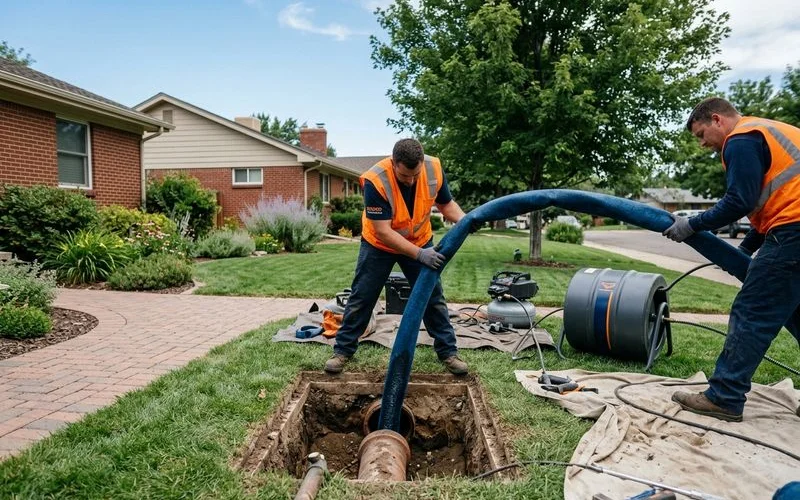
Pipe Bursting Technology
Pipe bursting is the other common no dig sewer repair method. A steel bursting head pulls a brand new pipe through the old one, fracturing the old material outward into the surrounding dirt. Contractors rely on this when replacement is needed but yard access still allows a horizontal pull.
Our technicians typically install High-Density Polyethylene (HDPE) pipe during a bursting job. This flexible plastic is ideal for Arvada properties because it resists the stress caused by expansive bentonite clay soils. Both techniques usually require only small access pits at the start and end of the run, leaving the rest of your yard completely intact.
How traditional excavation works
Excavation means opening a wide trench down to the existing line, removing the damaged section, installing a new pipe, and backfilling the dirt. It is the older method and still the right call in many complex situations. In residential Arvada work, excavation typically means digging across part of the yard and possibly tearing through landscaping, paths, or concrete driveways.
We often see excavation costs range from $5,000 to $15,000 in the Denver metro area, depending on how deep the crew has to dig. Rocky soil and deep frost lines can slow down heavy machinery, increasing labor time significantly. Prices can climb even higher if the damaged line extends under a city street or a public sidewalk.
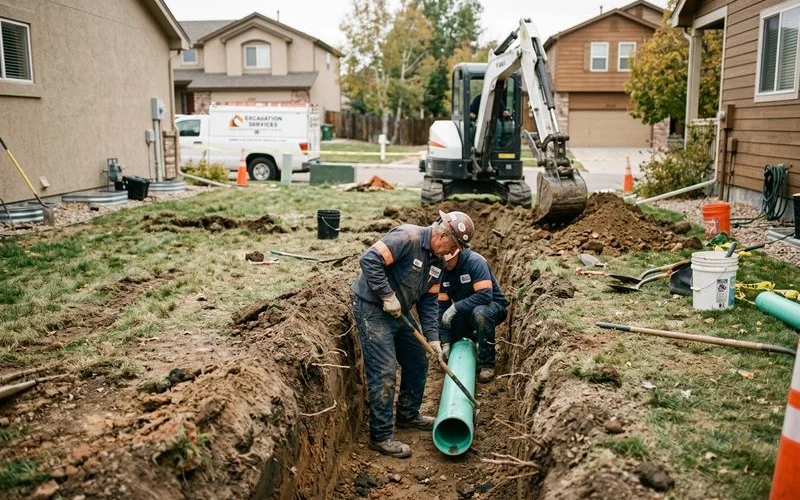
This approach provides complete visual access to the problem area. Workers can physically inspect the surrounding soil and correct severe grading issues that trenchless methods cannot fix.
Traditional excavation remains the only guaranteed way to physically correct soil grading issues and eliminate standing water inside the line.
Our excavation crews always focus on careful planning to minimize the footprint of the dig. Routing, depth calculations, and proper shoring techniques make the process much safer. A well-planned dig is faster and leaves less mess than a rushed emergency job.
Direct comparison of trenchless sewer repair vs excavation
We created this side-by-side breakdown to highlight the objective differences between the two methods. Comparing concrete numbers and physical impacts makes the choice much clearer.
| Factor | Trenchless | Excavation |
|---|---|---|
| Yard impact | Two small pits | Full trench |
| Driveway / concrete | Often preserved | Often broken and replaced |
| Landscaping | Mostly preserved | Disturbed along the trench |
| Job duration | Usually 1 day | 1 to 3 days |
| Expected lifespan | 50 to 60 years | 50+ years |
| Average Denver cost | $4,000 to $12,000 | $5,000 to $15,000+ |
| Permit / inspection | Yes | Yes |
| Pipe condition required | Reasonably continuous host pipe | None, even collapsed lines |
| Severe bellies or major sag | Cannot fix | Can fully address |
| Total cost with restoration | Often comparable or lower | Restoration adds significant cost |
When trenchless is the right call
Trenchless technology is the right call when your existing host pipe is still structurally intact but suffering from root intrusion or minor leaks. Older homes built before 1970 heavily feature vitrified clay pipes, which are highly susceptible to these issues at every single joint. If the pipe structure is intact, relining it saves massive amounts of time and money.
Our team looks for these specific conditions before recommending a trenchless approach:
- Root intrusion and joint separation in an otherwise sound pipe
- Pipe damage under concrete driveways, finished landscaping, or hardscape
- Older lines with minor cracks but no signs of a total collapse
- Time-sensitive emergencies where a 1-day completion matters most
When excavation is the right call
Excavation is the right call when the pipe has severe structural damage, such as a complete collapse or a severe belly holding standing water. Expansive Colorado soils constantly shift, which can cause these physical grade issues. A flexible liner will just follow that sunken shape instead of fixing the water flow.
We advise a full open-trench replacement when dealing with these major structural failures. The list below outlines the situations where traditional digging is absolutely necessary:
- A completely collapsed or partially crushed sewer line
- A severe belly that needs physical grade correction in the soil
- A line with major blockages that no trenchless approach can reliably traverse
- Repairs to a localized section where the rest of the line is perfectly fine
Evaluating pipe lining vs replacement comes down to basic physics. You cannot line a pipe that has lost its physical shape entirely.
A simple decision framework
The best decision framework for sewer repair starts with a camera inspection and ends with a total cost analysis. Following a clear, step-by-step process ensures you get the most value out of your repair budget.
We recommend using this straightforward checklist to guide your conversations with any plumbing contractor.
- Get the camera inspection. Without video evidence, any quote is just a blind guess.
- Ask about host pipe viability. Your plumber can tell you directly from the footage if the existing pipe can host a liner or a burst.
- Calculate total project expenses. If trenchless is viable, weigh it against the total cost of excavation, including landscaping restoration.
- Plan unavoidable digs carefully. If excavation is mandatory, route, depth, and shoring matter immensely.
Both methods, done right, leave you with a working sewer line for decades. The choice between trenchless sewer repair vs excavation is mostly about your situation, including your pipe material, yard layout, and budget.
We encourage you to review all your options before signing a contract.
See our sewer line repair cost guide for Colorado for accurate, localized cost ranges to help you plan your next step.