
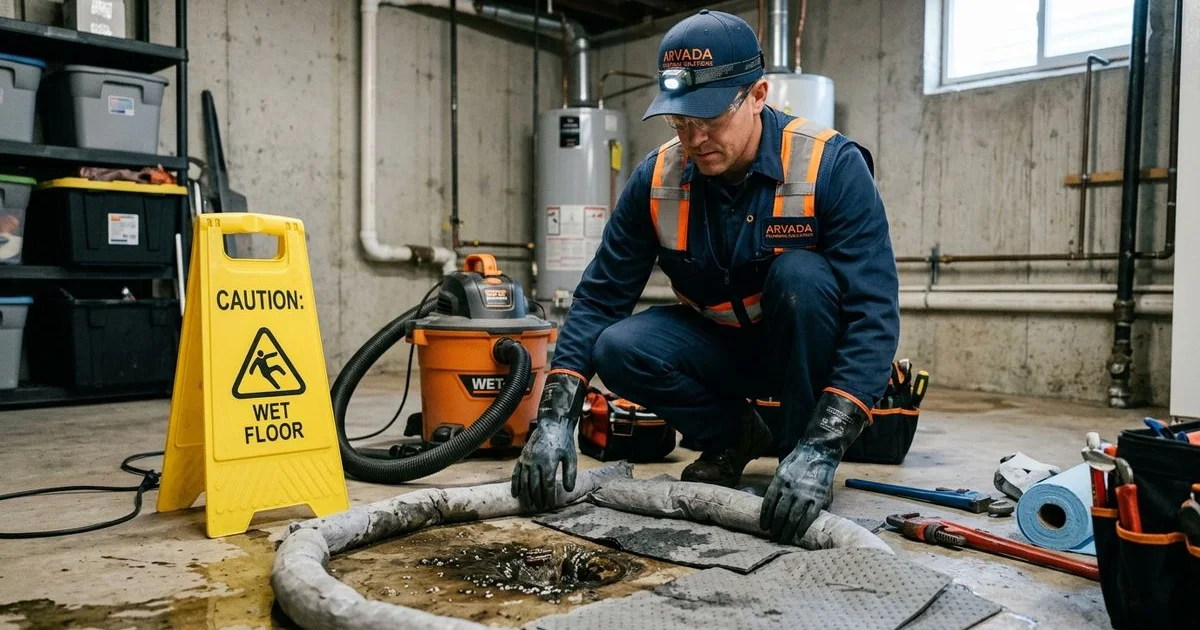
A sewer backup is two emergencies in one
When you see water pooling around a basement drain, you know exactly what is at stake. The situation quickly escalates from a messy floor to a serious structural and health concern.
Figuring out your sewer backup what to do checklist is critical to limiting the damage.
We have seen firsthand how fast these situations spiral out of control in Arvada homes. Raw sewage carries bacteria, viruses, and parasites.
Once it spreads across a floor, the cleanup is much more involved than ordinary water damage.
The immediate response is always the same regardless of the cause.
You must stop adding to the water volume, stay clear of the mess, and get emergency plumbing help on the way immediately. Here are the exact steps to take.
Step 1: Stop all water use
Shutting off every water source in your home is your first and most urgent priority. Every gallon of water you put into your plumbing has to go somewhere.
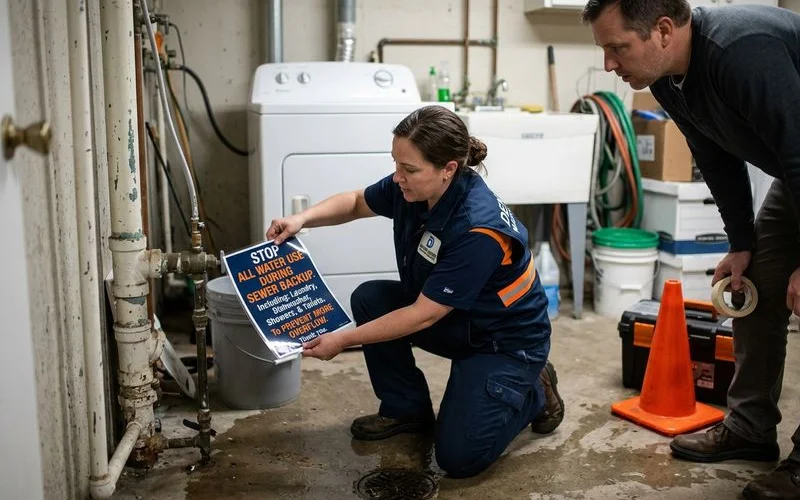
When the main sewer line is blocked, that “somewhere” is straight up through the lowest drain in your house. A standard washing machine pumps 15 to 30 gallons of water per load directly into your pipes. That entire volume will end up on your basement floor if the line is clogged.
Stop using these fixtures immediately:
- Faucets and sinks
- Showers and tubs
- Toilets (do not flush)
- Washing machines and dishwashers
- Ice makers
- Any irrigation or outdoor water that drains into the sewer
Our technicians often arrive to find that a family member accidentally turned on a faucet out of habit. Alert everyone in the house immediately so nobody makes the backup worse.
Step 2: Avoid contact and stay clear
Having raw sewage in house environments creates an immediate Level 3 biohazard situation. Treat the entire affected area with extreme caution.
The U.S. Environmental Protection Agency warns that raw sewage carries harmful pathogens like E. coli, Salmonella, and Hepatitis A.
We strongly advise keeping everyone far away from the contaminated zone. The water might not look highly alarming at first glance, but invisible threats are present.
Follow these strict safety rules:
- Do not walk through the affected area in shoes you will wear elsewhere.
- Keep pets and children entirely clear of the floor.
- Never touch the water or anything submerged in it without protective gear.
- If you must enter to shut off a breaker, wear heavy rubber boots and waterproof gloves.
Taking these precautions prevents you from tracking dangerous bacteria into clean areas of your home.
Step 3: Ventilate
Opening windows on opposite sides of the affected area creates necessary cross-ventilation. Sewer gas contains hydrogen sulfide and methane, which are irritating at best and toxic in confined basement spaces.
Your HVAC system can actually make the situation much worse. If you have return vents near the spill, shut off your central heating or cooling system immediately.
We see this mistake frequently, and running the fan will pull contaminated air and aerosolized bacteria directly into your ductwork. That circulates pathogens to the rest of the house.
Instead, rely strictly on natural airflow from cracked windows to safely vent the gases outside.
Step 4: Document, then leave it
Taking clear photos and videos from a safe distance is critical for your insurance claim. You need evidence of the initial damage before the cleanup crew alters the scene.
The average cost of professional sewage restoration often exceeds $3,000, making thorough documentation financially necessary.
Focus your camera on these key areas:
- The active backup point (usually an overflowing floor drain or basement shower)
- The total spread of the sewage across the floor
- Any visibly damaged furniture, boxes, or baseboards
Once you capture this media, leave the area immediately. The cleanup of a black water event is never a DIY job.
Professional water damage restoration teams follow strict biohazard protocols to sanitize the space. Fortunately, most homeowners insurance policies with a specific sewer backup endorsement will cover this professional remediation.
Step 5: Call
Treating this as a same-day sewer backup emergency call is absolutely vital. Leaving raw sewage to sit for even 24 hours allows moisture to wick up drywall and breed severe mold. If you are not sure whether your situation rises to that level, our is it a plumbing emergency guide spells out the warning signs that demand an after-hours call.
When you reach our dispatch team, please provide these specific details:
- Confirm that it is a sewer backup, rather than a standard isolated plumbing leak.
- Tell the dispatcher which fixture is overflowing (basement floor drains are the most common culprits).
- Mention if you have experienced similar backups in the past.
- Verify that you have completely stopped all water use in the house.
Many Arvada homes built in the 1960s and 1970s still rely on their original clay sewer pipes. These porous lines are highly susceptible to tree root intrusion, which causes the majority of main line blockages we see.
Our primary goal is to clear that blockage and restore flow. The crucial second step is performing a camera inspection to figure out exactly why it happened so we can prevent it from recurring.
After the line is cleared
Getting the water flowing again is only the first phase of the recovery process. Once a plumber has cleared the blockage and verified the pipe’s condition with a camera, the sanitization phase begins.
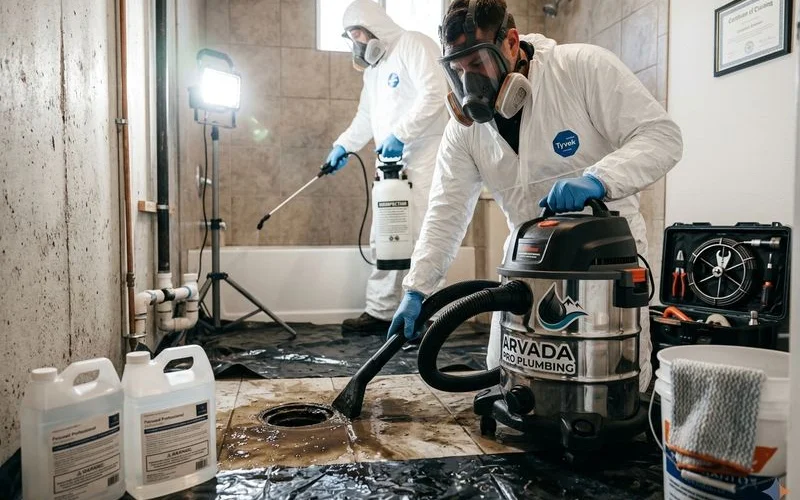
We always recommend hiring certified technicians who follow the IICRC S500 standard for professional water damage restoration. This ensures the environment is actually safe to inhabit again.
Here is what happens next:
- Professional Cleanup: Restoration experts will extract the standing water, apply antimicrobial treatments, and run commercial dehumidifiers.
- Root Cause Resolution: If the camera reveals root intrusion or a broken pipe, scheduling a follow-up sewer line repair plan is your next step.
- Material Disposal: Soft, porous materials saturated with sewage cannot be saved. Carpet, padding, and affected drywall must be removed and completely replaced.
Insurance check before the next event
Reviewing your homeowners policy before disaster strikes is the smartest financial move you can make. Many homeowners are shocked to discover that standard policies explicitly exclude sewer backups.
If you do not already have specific water backup coverage endorsed on your policy, you are carrying a massive financial risk. Adding this rider is surprisingly affordable, usually costing only $50 to $150 per year.
This simple addition provides $5,000 to $25,000 or more in critical coverage. Here is a quick look at how this coverage typically breaks down:
| Event Type | Standard Policy Coverage | Sewer Backup Endorsement |
|---|---|---|
| Burst indoor water pipe | Usually Covered | Not needed |
| Main sewer line backs up into basement | Not Covered | Covered |
| Sump pump fails during storm | Not Covered | Covered |
We highly recommend calling your insurance agent today to verify your status. This is especially urgent if you have a finished basement with expensive flooring or electronics.
A practical reminder
A sewer backup is one of those rare emergencies where the right initial response is simply to stop doing things. You must stop running the water, stop walking through the contaminated zone, and stop trying to clean it up yourself.
Our team handles these exact scenarios every single week. Following these simple containment steps keeps a stressful afternoon from turning into a multi-week, expensive disaster.
Call a professional plumber immediately to clear the line, and then contact your insurance provider to start the cleanup claim.