
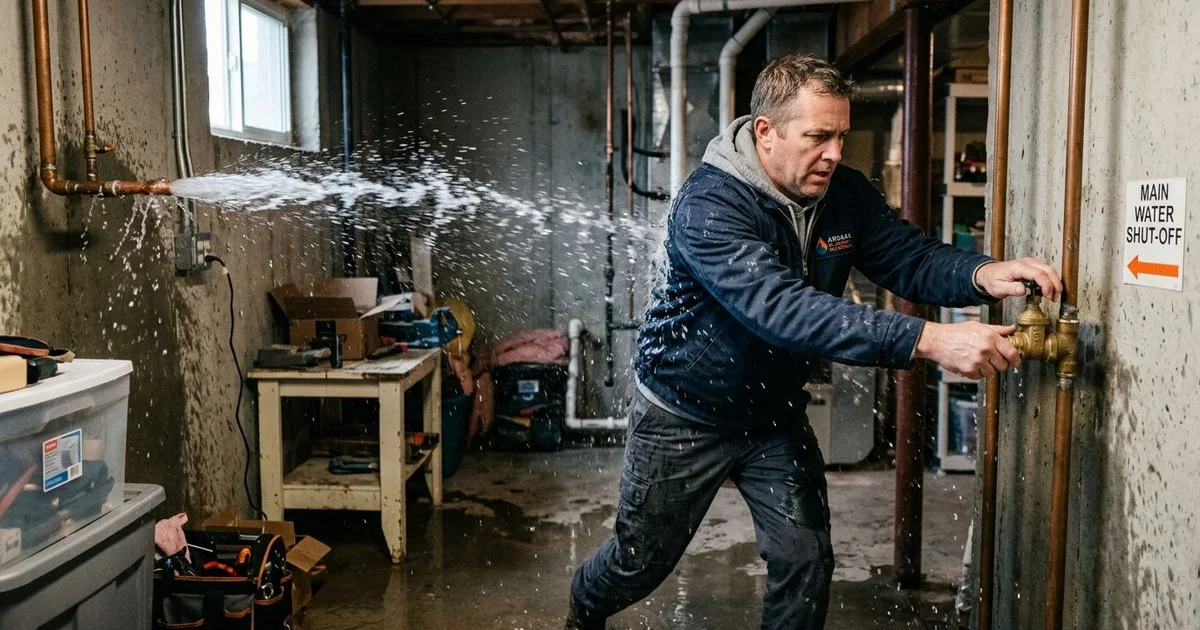
The first five minutes matter most
We see this panic unfold every winter across Arvada. Knowing exactly what to do when a pipe bursts can save your property. A standard burst pipe sprays roughly 5 to 7 gallons of water per minute.
Our teams know that translates to 25 to 35 gallons flooding your floor in the first five minutes alone. Stopping the flow fast remains the highest-leverage action you can take for your home and your insurance claim. Emergency plumbing help is on the way once you call.
We put together the steps below to buy you crucial time while you wait.
Step 1: Shut off the water
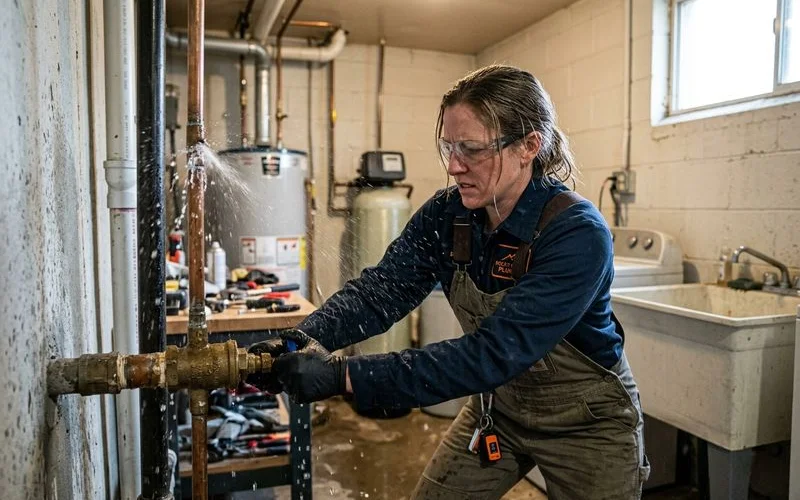
This is the single most important step in any plumbing emergency. Go directly to your main water shutoff valve and close it immediately.
We recommend locating this valve long before a burst pipe emergency strikes. If you do not know where your main shutoff is, this is the exact moment you wish you had checked in advance. See the how to shut off the water main guide for finding it quickly.
Our technicians often use a specialized water meter key for street-level utility boxes, but your interior shutoff just requires a firm hand. The mechanism depends entirely on the age of your plumbing. Here is how to handle the two most common types:
| Valve Type | How to Close It |
|---|---|
| Ball Valve | Rotate the straight lever 90 degrees so it sits perfectly perpendicular to the pipe. |
| Gate Valve | Turn the round wheel clockwise multiple turns until it is completely tight. |
We suggest opening a faucet at the lowest point in the house, like a basement sink, right after the main is closed. This action relieves internal pressure on the system. It stops the remaining leak faster as trapped water drains down to that lowest point.
Step 2: Cut electricity if needed
Shut off the breaker for any affected circuit before walking through standing water. If water is reaching electrical outlets, breaker panels, light fixtures, or major appliances, cut the main breaker for the whole house.
Our safety protocols dictate that you never mix standing water with live electrical voltage. The risk of severe shock is incredibly high in these situations. If the breaker panel itself sits in the flooded area or is hard to reach safely, stay totally clear.
We urge homeowners to call Xcel Energy or the local Arvada fire department to cut power directly at the outside meter in these extreme cases.
Step 3: Contain the water
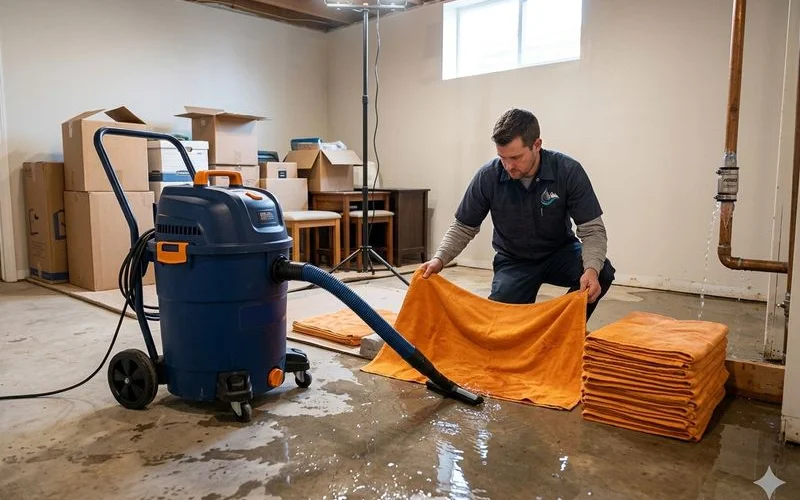
Move belongings out of the path of water immediately. Get porous items like rugs, electronics, papers, framed photos, and furniture cushions up off wet floors.
We strongly advise using high-capacity tools to capture the flow as quickly as possible. The EPA notes that harmful mold can begin growing in just 24 to 48 hours on damp surfaces. Fast containment minimizes this specific health hazard.
Our crews rely on professional-grade extraction, but your standard household items work exceptionally well in a pinch. Gather these tools in priority order to slow the spread:
- Wet/dry vacuum: A brand like RIDGID or Shop-Vac offers the fastest removal of standing water.
- Towels, blankets, and rags: Use these for soaking up the expanding edges of the puddle.
- Buckets: Place these directly under any active overhead drip points.
- A tarp or shower curtain: Drape these to protect furniture and surfaces below ceiling leaks.
Step 4: Document for insurance
Take photos and short videos of the damage before moving too much heavy debris. Visual evidence directly supports your mitigation claims during the review process.
We see homeowners lose out on fair settlements because they fail to capture the initial flood pattern. The average U.S. household claim for water damage and freezing sits around $12,500 based on recent industry data. Proper documentation ensures you get the exact financial coverage you pay for.
Our local experience shows that Colorado insurers generally must pay complete, valid claims within 60 days. You need to start building your evidence file immediately. Capture clear images of these critical details:
- The actual burst point itself.
- The full pattern and depth of the standing water.
- Each damaged area, including ruined personal belongings.
- The time on a clock or your phone screen, because timestamps matter.
- Brand names and specific model numbers of affected appliances.
We recommend keeping every receipt for emergency supplies you buy, such as a wet vac, box fans, or dehumidifiers. Many standard insurance policies reimburse reasonable mitigation costs. These immediate investments prevent further structural decay.
Step 5: Call a plumber
If you have not called for professional help already, make the dial right now. Most burst-pipe calls get a rapid, same-day emergency response.
We need to know specific details about your situation to dispatch the exact right equipment. Take a breath and speak clearly to the dispatcher. Be sure to mention these key points:
- That a pipe has completely burst.
- That the main water valve is currently off.
- Whether you have any immediate electrical safety concerns.
- Whether the burst stems from a frozen line, a frequent issue during Arvada winters.
Our standard repair process is highly efficient once the entire line is fully depressurized. The plumber will simply cut out the failed section. They then install a brand new copper or PEX fitting and run a rigorous pressure test.
Step 6: Move water out and start drying
Continue removing standing water while you wait for the repair van to arrive. The faster you start the drying process, the less drywall and subfloor damage you accumulate.
We recommend taking these specific steps to speed up evaporation:
- Open multiple windows if the outdoor temperature allows for dry air exchange.
- Run heavy-duty box fans to push air directly across the dampest surfaces.
- Turn on your home dehumidifier to pull moisture from the ambient air.
- Pull up wet rugs and underlayment to expose the raw subfloor underneath.
Our mitigation partners use massive commercial desiccant dehumidifiers on large jobs. However, your quick response limits how much heavy equipment the house actually needs. Every gallon of water you remove manually saves money on the final restoration bill.
Why frozen pipes burst in Colorado winters
Frozen pipes do not burst from the expanding ice itself. They burst from the extreme water pressure that builds rapidly between the frozen ice blockage and a closed faucet.
We track local weather closely, and pipe freeze risks spike dramatically when Arvada temperatures drop below 20 degrees Fahrenheit. Water expands by nearly nine percent as it freezes inside a closed system. With nowhere to go, internal pressure reaches up to 2,000 pounds per square inch.
Our emergency diagnostic calls prove that the weakest pipe fitting always fails under that intense stress. You must pay close attention to these highly vulnerable plumbing areas during a freeze:
- Uninsulated pipes running through cold crawlspaces.
- Water lines located on unheated exterior walls.
- Exposed pipes inside attached garages.
We find that the actual location of the burst is often somewhere warm inside the house. The literal rupture happens when the frozen line first thaws and all that trapped, high-pressure water suddenly releases. If you suspect a frozen pipe and want to thaw it safely, see the service page on frozen and burst pipe repair. Taking proactive steps today prevents a massive flood tomorrow.
What you can and cannot do yourself
A burst pipe ranks as one of the most stressful plumbing emergencies a homeowner will ever face. Knowing your exact DIY limits prevents further structural damage and keeps you safe.
We split the recovery process into safe homeowner actions and mandatory professional repairs. Stopping the water, calling for help, and protecting your belongings gets you 80 percent of the way to a manageable cleanup. The remaining 20 percent requires specialized tools, local permits, and proper licensing.
We created this strict dividing line to help you understand exactly what to do when a burst pipe emergency hits:
| Safe to Do Yourself | Leave for the Plumber |
|---|---|
| Shut off the main water and local electricity. | Cutting and repairing the actual failed pipe. |
| Contain standing water with vacuums and towels. | Soldering copper or PEX-crimping new sections. |
| Document the initial damage for insurance. | Re-pressurizing and testing the repaired system. |
| Start drying surfaces with fans and open windows. | Verifying the integrity of hidden wall joints. |
A fast, safe handoff to a professional protects the long-term value of your home. Your quick action simply sets the stage for a smooth, permanent repair.
Our local plumbing experts are ready to take over the heavy lifting the second we arrive at your door. If you are staring at a flooded floor right now, pick up the phone. Call a licensed Arvada professional today to get your water system safely restored.