
The case for tankless water heater benefits
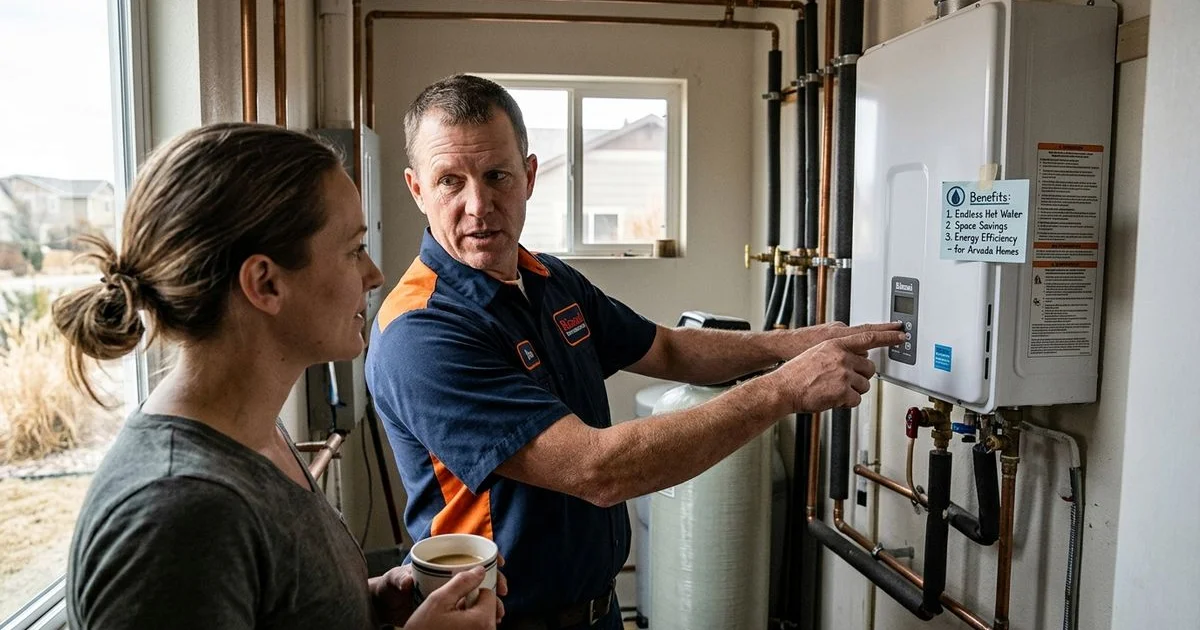
We often see homeowners wrestling with the decision to ditch their old, failing hot water tanks. At Arvada Pro Plumbing, our goal is to provide dependable services and clear guidance to local homeowners facing this exact upgrade. The truth is that understanding tankless water heater benefits comes down to three clear advantages and a few specific compromises.
Upgrading your Tankless water heater service makes sense for many Arvada properties.
This technology completely changes how you use hot water daily.
Let’s look at the data, what it actually means for your daily routine, and then explore the exact pros and cons you need to consider.
Benefit 1: Endless hot water
A tankless system provides continuous hot water by heating it on demand, meaning it never runs dry if properly sized for your home. You gain the ability to run multiple showers back-to-back without the dreaded cold shock.
Our team frequently installs units from premium brands like Navien and Rinnai that feature built-in recirculation pumps. This eliminates the wait time for hot water at your fixtures. For households where a soaking tub takes ten minutes to fill, the difference is genuinely lifestyle-changing.
Common peak demand examples in a typical home:
- Standard shower head: 2.5 GPM
- Kitchen faucet: 1.5 GPM
- Dishwasher: 1.5 GPM
- Washing machine: 2.0 GPM
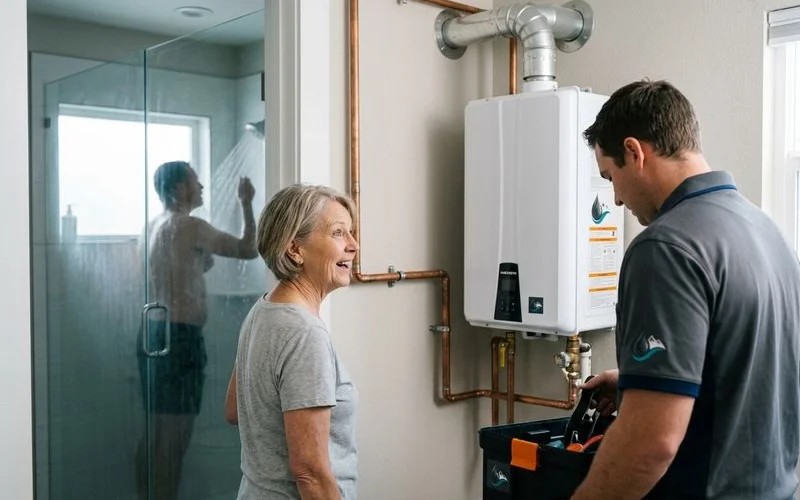
The trade-off: “Endless” only works if the unit’s Gallons Per Minute (GPM) rating covers your peak demand. A standard shower uses about 2.5 GPM, so running two showers and a dishwasher requires a unit that can handle at least 6 GPM.
Undersized tankless units simply cannot keep up with heavy usage. When demand exceeds capacity, the water turns lukewarm, and you will quickly wonder what you paid for.
Benefit 2: Energy efficiency
Tankless systems lower your utility bills by completely eliminating the standby heat loss that plagues traditional storage tanks. They only consume fuel when you actively open a hot water tap.
We constantly remind customers that a traditional water heater loses heat continuously throughout the day. The hot water just sits there, and the tank radiates heat into your uninsulated basement or garage whether you are home or not. The U.S. Department of Energy reports that this standby heat loss can account for 10% to 20% of your annual water heating costs.
That standby loss is energy you pay for and do not get. Typical savings range from 10% to 30% over a similar-tier tank unit, depending on your household usage patterns.
| Feature | Traditional Tank | Tankless System |
|---|---|---|
| Standby Heat Loss | 10% to 20% waste | Zero standby loss |
| Heating Method | Runs periodically all day | On-demand only |
| Average Lifespan | 10 to 13 years | 15 to 20+ years |
| Energy Savings | Baseline cost | 10% to 30% reduction |
The trade-off: Energy savings take years to recoup the higher upfront cost. Break-even is typically 7 to 10 years based on local natural gas and electricity rates, so if you plan to move sooner, the financial math changes completely.
Benefit 3: Space savings and longer lifespan
Tankless heaters free up valuable floor space by mounting directly to the wall, taking up about the same room as a small suitcase. They also outlast traditional tanks by nearly a decade due to their replaceable components and lack of a storage tank that can rust out.
Our technicians appreciate how these compact units easily fit into tight utility closets or modern basement remodels. Compare that to a bulky 50-gallon tank that stands five feet tall and eats up several square feet of your floor plan. Freeing up that square footage can create new layouts that a massive tank simply blocks.
Ideal installation locations for space savings:
- Mounted high on an unfinished basement wall
- Tucked inside a dedicated utility closet
- Installed in a heated garage
- Placed in a laundry room cabinet
On top of that, tankless units deliver a lifespan of 15 to 20 years, compared to just 10 to 13 years for standard tanks. This longevity happens because they have less to corrode, meaning there is no massive metal tank waiting to fail and flood your floor.
The trade-off: The term “well-maintained” matters far more for tankless systems than for basic tanks. You cannot simply ignore them and expect two decades of flawless performance.
The drawbacks worth knowing
While the long-term perks are impressive, making the switch involves several practical hurdles.
Higher upfront cost
Upgrading to a tankless system requires a significantly larger initial investment compared to a basic tank swap. You can expect to pay anywhere from $3,500 to $8,000 for a fully installed tankless unit in the Denver metro area.
We price a like-for-like 50-gallon tank replacement closer to $1,600 to $2,400 installed. That price gap is substantial, and if your home requires a conversion, such as installing new PVC venting, a larger gas line, or an electrical panel upgrade, the final bill will sit at the higher end of that range.
Required descaling
Tankless systems demand annual flushing to remove mineral deposits that accumulate inside the narrow heat exchanger. Skipping this vital maintenance step restricts water flow and forces the unit to overwork.
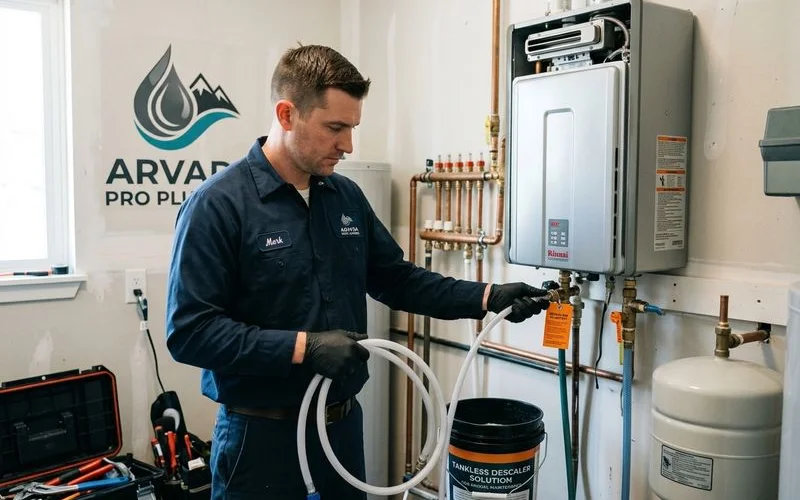
Our local water supply in Arvada averages around 7 to 9 grains per gallon of hardness, which classifies as moderately hard. In hard water areas like this, you must pump a white vinegar or commercial descaling solution through the system every 12 months to dissolve calcium buildup.
Failing to descale the unit shortens its lifespan significantly and will likely void your manufacturer warranty. You need to plan for this as an ongoing, non-negotiable maintenance task.
Gas line capacity
High-efficiency tankless heaters require a massive amount of sudden fuel, usually necessitating an upgrade to a 3/4-inch gas line. Most standard tanks run perfectly fine on a smaller 1/2-inch line because they heat water slowly.
We find that many older homes lack the gas capacity to deliver the 150,000 to 199,000 BTUs a tankless unit demands. Upgrading this line is a one-time cost, typically ranging from $400 to $1,200, depending on the distance to your gas meter, and it is a crucial part of the installation you cannot skip.
Cold winter water
Plunging winter temperatures drastically lower the temperature of the municipal water entering your home, which limits the total output of any tankless heater. The unit has to work twice as hard to reach your desired shower temperature.
During a freezing Colorado winter, incoming ground water can easily drop to 40°F or 45°F. Lifting that freezing water up to a comfortable 120°F requires a massive 75-degree temperature rise, meaning tankless units physically deliver fewer gallons per minute.
Our experts always size the equipment to ensure a unit that provides 7 GPM during a warm summer will not drop below your needs in January. Right-sizing the system for our specific winter climate is absolutely essential.
Power outage sensitivity
Gas-powered tankless units rely entirely on an electrical connection to run their digital control boards and electronic ignition systems. If your neighborhood loses power, you immediately lose your hot water supply, whereas a traditional gas tank with a standing pilot light continues to work flawlessly during a blackout.
We always point out this vulnerability to homes that absolutely require hot water during frequent storm outages. You can solve this by adding a small battery backup system specifically for the heater.
Who should pick tankless
A tankless upgrade is the perfect fit for homeowners who plan to stay in their property long enough to see the return on investment. It also solves immediate lifestyle problems for large families battling over limited hot water.
We highly recommend considering an on-demand system if you fall into any of these categories:
- Households with high simultaneous demand (multiple bathrooms, large family)
- Homes with tight utility space needing a smaller footprint
- Homeowners staying 7+ years in their current property
- Anyone prioritizing long-term energy savings and green technology
- New construction or major remodels where the initial install is much easier
Who should skip tankless
Sticking with a traditional storage tank makes the most financial sense if you are on a strict budget or plan to sell your home shortly. The higher upfront cost simply will not pay off quickly enough.
Our experts advise keeping a standard tank if your situation aligns with these factors:
- Tight budgets where the upfront installation cost matters most
- Modest hot water use (single occupants or couples)
- Short-term ownership plans of less than five years
- Homes where annual flushing and maintenance is unlikely to happen
Evaluating these tankless water heater benefits against your actual budget will help you make the smartest choice for your property.
For the full side-by-side comparison, see our tankless vs. tank water heater guide. Call our Arvada office today to schedule a consultation and get a precise installation quote.