
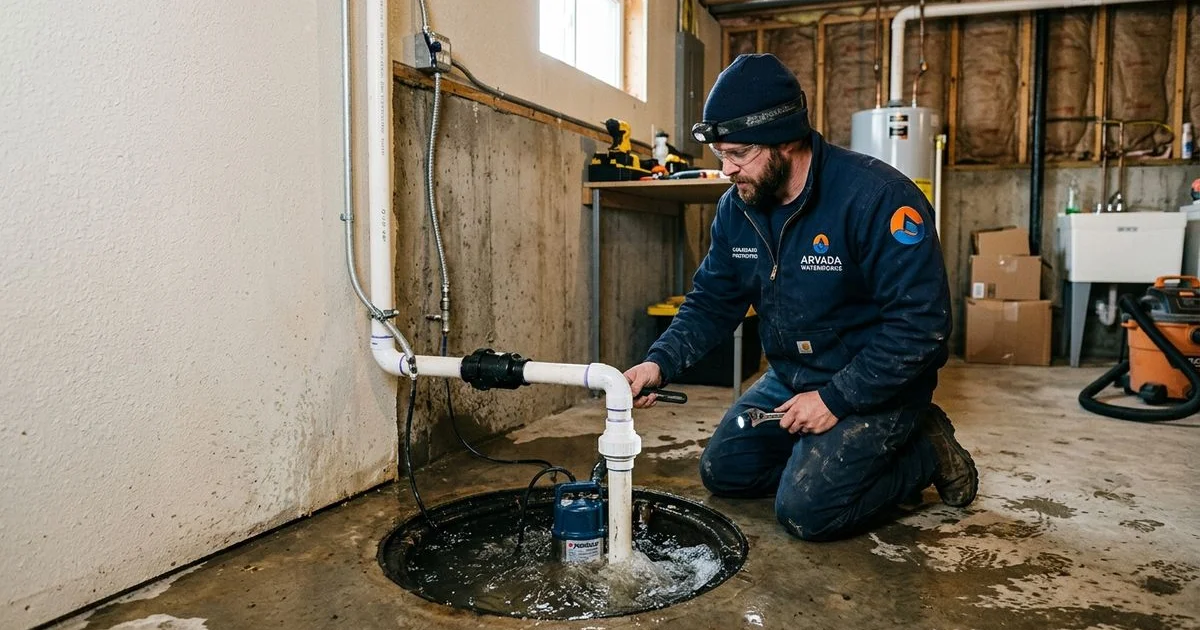
We see it every spring when the snowpack starts its rapid descent into the foothills.
The dividing line between a dry living space and a total loss usually comes down to one piece of equipment in the mechanical room. Dealing with a sump pump colorado basement setup is a unique challenge because local clay soils act like a bowl holding moisture against your foundation.
Our approach to sump pump services starts by mapping out exactly where that water pressure originates. Let’s examine the three biggest threats to your lower level, what recent data tells us about failure costs, and how to build a resilient system. Protecting your finished space requires understanding exactly what you are up against.
Three reasons Colorado basements flood
We find that local flooding happens because snowmelt, summer flash rain, and high water tables overwhelm the surrounding soil. These three predictable sources create intense hydrostatic pressure against your foundation walls.
The resulting pressure forces water through the smallest micro-cracks before you even realize a storm has hit. Our teams respond to dozens of these specific calls every single month.
A reliable system intercepts this intrusion long before your drywall gets wet. Waiting for water to appear is a strategy that always fails.
Spring snowmelt
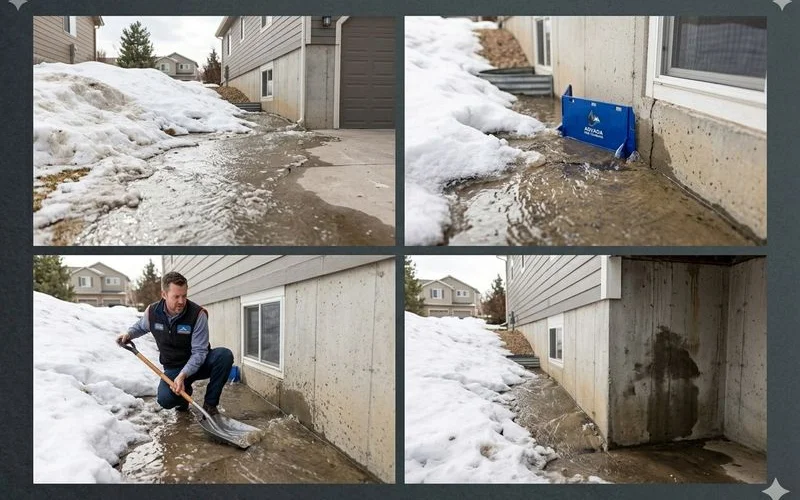
We track the melt rates closely because a sudden temperature spike in early April sends massive volumes of water down the foothills. The 2026 spring season showed us exactly how fast a low snowpack can liquefy and saturate the ground around your home.
Hydrostatic pressure builds rapidly when this concentrated burst hits the dense soils surrounding a basement flood arvada property. Our installations pull that water out of the pit as it arrives.
This continuous extraction prevents the rising water from ever reaching your baseboards. Moisture control becomes completely automatic when the right hardware is in place.
Heavy summer storms
We often see severe weather systems drop over an inch and a half of rain in under fifteen minutes. A flash event like the one recorded near Stratton in May 2026 overwhelms municipal drainage and residential gutters instantly.
Surface water quickly pools in low spots and pours down into window wells or saturated soil. Our emergency lines light up during these sudden cloudbursts because old plastic pumps simply cannot keep up with the inflow.
Upgrading your equipment ensures your lower level stays dry even when the yard looks like a lake. Heavy rain represents just one side of the seasonal moisture equation.
High water tables and groundwater
We regularly inspect homes near Ralston Creek where the natural groundwater sits just inches below the concrete slab. The rocky and clay-heavy terrain across Jefferson County naturally holds this moisture close to the surface year-round.
This persistent high water table means moisture constantly pushes up through floor seams even during a dry week. Our specialized pit designs intercept this hidden threat continuously.
Pumping it away automatically removes the risk of unseen seepage ruining your carpets. Financial risk scales directly with the amount of water that breaches your walls.
What a flood actually costs
We calculate the true value of a pump by comparing the $1,400 average installation cost against a $20,000 restoration bill. The financial math heavily favors proactive protection over paying for emergency cleanup.
Recent 2026 industry data shows that severe Category 3 water removal requires pulling out all porous materials immediately. Our clients who choose to install a backup system save thousands in avoided structural repairs.
Here is a realistic breakdown of current local pricing.
| Scope | Typical 2026 Cost |
|---|---|
| New primary cast-iron pump installed | $600 - $900 |
| Sump pump plus smart battery backup | $1,200 - $1,800 |
| Minor seepage cleanup (unfinished space) | $1,200 - $2,500 |
| One flooded basement (finished, clean water) | $5,500 - $9,000 |
| Severe flooding mitigation (finished, contaminated) | $10,000 - $20,000+ |
Standard home insurance policies rarely cover groundwater intrusion without a specific rider. We recommend reviewing your coverage before you end up paying out of pocket for mold remediation.
Protecting your investment requires taking control of the water at the source. Regional weather patterns demand a specific approach to mechanical design.
The Colorado-specific build for a sump pump colorado basement
We construct regional systems using heavy-duty cast-iron units, freeze-protected discharge lines, and smart backups. Standard hardware store kits fail rapidly under the intense continuous duty required by local storms.
Upgrading to commercial-grade components guarantees longevity.
A cast-iron primary pump
Our technicians pull out burnt-up plastic units every week that barely lasted three years. Plastic models overheat and warp when tasked with moving thousands of gallons during a prolonged storm.
Cast-iron naturally dissipates motor heat into the surrounding water. We only install professional-grade brands like Zoeller or Liberty Pumps because they use solid metal housings.
Investing in heavy construction easily doubles the lifespan of your core equipment. Moving that water out of the pit is only half the battle.
Adequate discharge
We route discharge pipes at least ten feet away from the foundation to prevent the exact same water from recirculating. Winter nights easily drop below zero, freezing any stagnant water trapped inside a poorly sloped exterior line.
Adding a specialized freeze-protection fitting like an IceGuard allows water to escape even if the buried pipe clogs with ice. Our routing designs prioritize a steep downward slope away from your property.
Proper grading eliminates the most common seasonal failure mode in the Denver metro. Gravity constantly pulls the standing column of water right back into the basin after the motor shuts off.
A check valve
We install quiet check valves just above the pit to stop ejected water from crashing back down the pipe. This constant refilling forces the switch to cycle on and off rapidly.
A high-quality valve eliminates the annoying clunking noise entirely. Our plumbers know that motor burnout is the primary killer of electric pumps.
Preventing short-cycling saves the machinery from unnecessary wear. Severe Xcel Energy grid outages almost always coincide with the most violent spring thunderstorms.
A battery backup
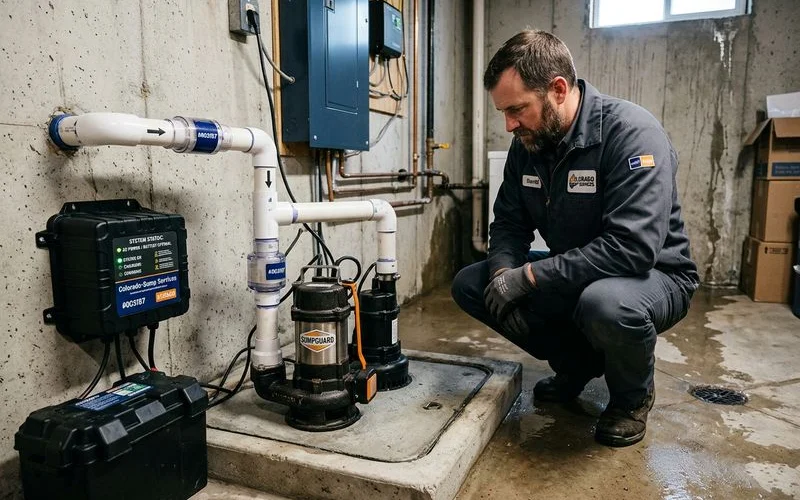
We consider a secondary DC-powered pump the most critical piece of an effective sump pump need colorado strategy. Your primary AC motor is completely useless when the neighborhood goes dark.
Modern backup batteries provide hours of continuous pumping capacity to ride out the worst outages. Our preferred systems switch over automatically the second the primary power drops.
This redundancy protects your valuables when you are sleeping or away at work. A basic float switch triggers a loud audible siren in the basement.
A high-water alarm
We highly recommend Wi-Fi enabled smart monitors like the Moen system to catch rising levels instantly. Digital devices send a direct push notification straight to your phone.
Knowing about a potential overflow while you are still at the office gives you time to react. Our customers appreciate the small extra cost for this digital peace of mind.
Catching a mechanical issue early prevents a minor hiccup from becoming an insurance claim. A proactive approach stops disasters before they ruin your finished drywall.
A flood-protection checklist
We build complete protection plans around redundant hardware, clear discharge paths, and routine manual testing. Regular maintenance keeps the internal floats from sticking.
The following components create a true fail-safe barrier against groundwater:
- Primary cast-iron unit: Properly sized horsepower for your specific pit depth and expected volume.
- Secondary battery pump: Plumbed into the same discharge line with a dedicated smart charger.
- Wi-Fi high-water alarm: Configured to alert multiple family members if the basin fills too high.
- Quarterly vinegar flush: Arvada water sits at 160 mg/L total dissolved solids, so flushing the pit prevents hard mineral crusts from jamming the switch.
- Annual bucket test: Manually pouring five gallons of water into the basin verifies the float engages smoothly.
- Frost-protected discharge: Ensuring the exterior pipe slopes away cleanly and utilizes an anti-freeze air gap.
Our teams walk every homeowner through these basic maintenance steps after an installation. Catching these early warning signals saves your flooring from a muddy mess.
For details on what failure looks like and how to spot it, see our signs your sump pump is failing guide.
When to install if you do not have one
We tell clients that finishing a lower level without active water management is a gamble you will eventually lose. Any major remodel or discovery of foundation seepage should immediately trigger an equipment upgrade.
Waiting for the first major puddle to appear guarantees you will be paying emergency weekend rates. Our installation process is straightforward and typically completed in a single day.
The most common life events that necessitate immediate action include:
- Buying an older property: Previous owners mentioning occasional dampness usually means poor drainage exists.
- Basement remodeling: Pulling permits for an egress window or new bedroom often highlights code requirements for moisture control.
- After a minor scare: Seeing wet concrete spots during the spring thaw is a red flag for future surges.
- Expanding your family: Moving a nursery or playroom downstairs demands absolute certainty that the space will stay dry.
Securing absolute peace of mind before the next big storm rolls over the mountains provides the greatest return on your investment.
We understand that cutting into your foundation seems disruptive, but the process is highly controlled and clean. Completing a brand-new pit usually takes just one afternoon of work.
Call our shop today to schedule a thorough inspection of your sump pump colorado basement setup and protect your home before the weather turns.