
We see the effects of local water quality on home plumbing systems every single day. Recent water quality reports show Arvada water carries a mineral load of around 158 parts per million.
This moderately hard water is exceptionally tough on pipes and appliances. Our experience shows that these dissolved minerals, primarily calcium and magnesium, precipitate out and deposit as scale when heated.
Catching this hard water water heater sediment early is a standard part of normal water heater repair work in Arvada.
We will explain exactly how water heater sediment buildup damages your unit and share specific maintenance steps to prevent it.
Why hard water water heater sediment is a problem
Hard water destroys water heaters by leaving behind calcium and magnesium deposits that bake onto heating elements and tank bottoms. These hard mineral layers insulate the water from the heat source, forcing the system to work much harder to reach your desired temperature. Our team consistently finds that Arvada water carries a mineral load of about 158 parts per million, which accelerates this scale formation.
Those dissolved minerals stay perfectly suspended in cold water. Heating the water causes the calcium and magnesium to precipitate out and form a solid crust.
Inside your water heater, that scale collects in two main places: on the bottom of the tank for gas units and directly on the heating elements for electric models. Both locations create unique problems that compound over time.
What sediment does to your heater
Sediment accumulation creates a cascade of mechanical failures that slowly degrade your system. The damage starts as a minor efficiency drop and eventually leads to permanent component failure. We regularly see how ignoring this buildup turns a simple maintenance task into a costly emergency.
Efficiency loss
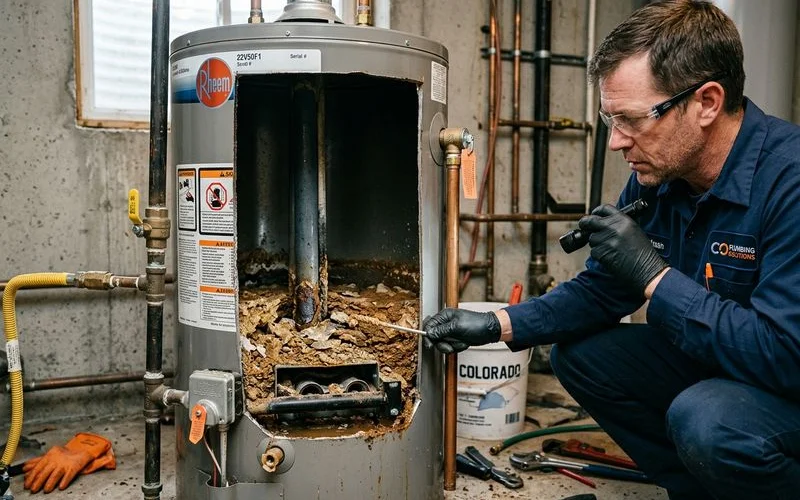
Sediment at the bottom of a gas tank acts as a thick layer of insulation between the burner and the water. The burner has to run much longer to heat the same amount of water. This prolonged heating cycle leads to a noticeably larger gas bill and puts severe strain on the unit.
Our service calls confirm that a heavily scaled water heater can lose a significant percentage of its operating efficiency. On electric units, the scale coats the heating elements directly. The result is exactly the same: longer heating cycles, worn-out elements, and higher energy use.
The U.S. Department of Energy estimates that updated efficiency standards and proper maintenance can save homeowners over $100 annually. You pay a literal penalty on your utility bill every month your heater operates with thick scale buildup.
Popping or rumbling sounds
That loud popping noise from your utility closet is the sound of water boiling underneath a dense layer of sediment. Steam bubbles get trapped beneath the crust, build up pressure, and forcefully burst through the hardened minerals.
It is not just a nuisance noise. This violent bubbling indicates a significant mineral buildup that requires immediate attention. Our technicians use these noises as a clear diagnostic indicator of severe scaling.
Accelerated corrosion
The heavy sediment layer traps intense heat directly against the steel bottom of the tank. This concentrated heat accelerates the rate of corrosion dramatically.
Natural electrolytic activity inside a water heater already attacks the metal, and the trapped heat speeds up this degradation. You will likely experience a premature tank failure if this combination is left unchecked. We always recommend acting quickly when rust is suspected.
Reduced hot water capacity
Heavy sediment physically takes up valuable space at the bottom of the tank. This displacement reduces the actual volume of hot water you have available for daily use.
Showers will start to feel noticeably shorter than they used to. We often drain tanks that have lost several gallons of capacity purely to solid mineral displacement.
How to manage it
Routine maintenance is the only reliable way to stop hard water heater damage before it ruins your plumbing equipment. Specific maintenance steps will keep the tank clean and protect the internal components from rust. Our maintenance plans focus heavily on removing these destructive minerals before they solidify.
Annual flushing
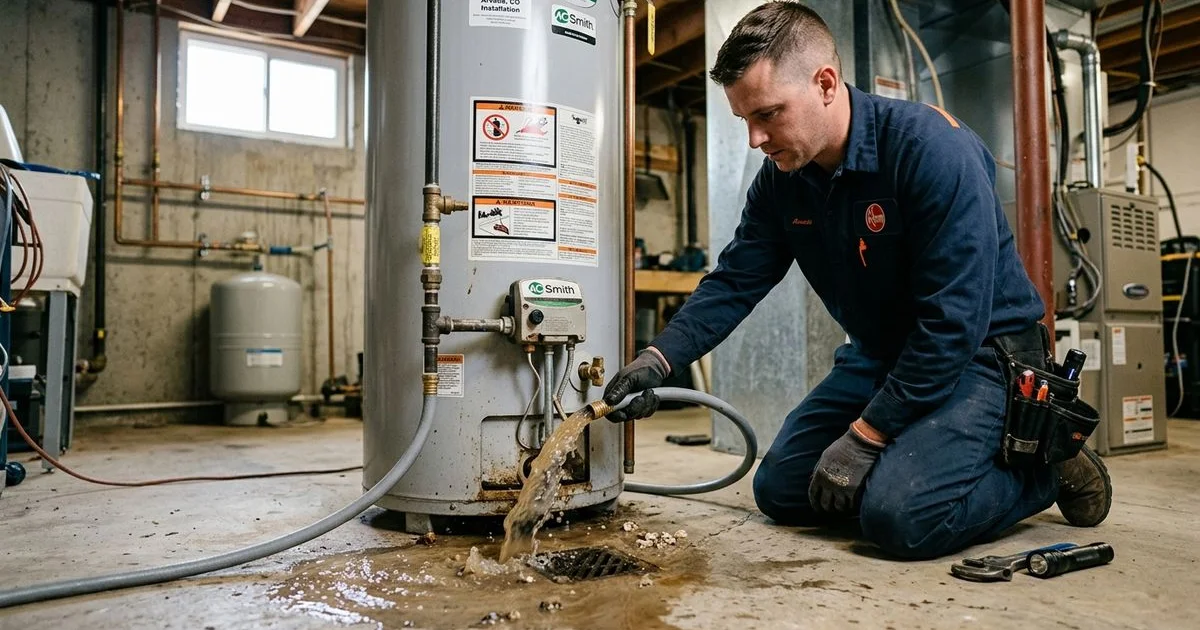
The single most effective preventive step is a complete system flush. The tank must be drained entirely once a year to wash out accumulated sediment before it hardens into an immovable rock. This simple process is a 30 to 45-minute job for most residential units.
You can do this yourself using a standard garden hose or schedule it with a local plumber as preventive maintenance.
Anode rod inspection
The sacrificial anode rod purposefully attracts corrosive elements to protect the steel tank from rusting. A standard magnesium anode rod is entirely consumed after about 3 to 5 years in Arvada’s hard water.
A worn-out anode rod marks the exact moment your tank begins to rust from the inside out. Inspection and replacement must be a core part of your annual maintenance routine.
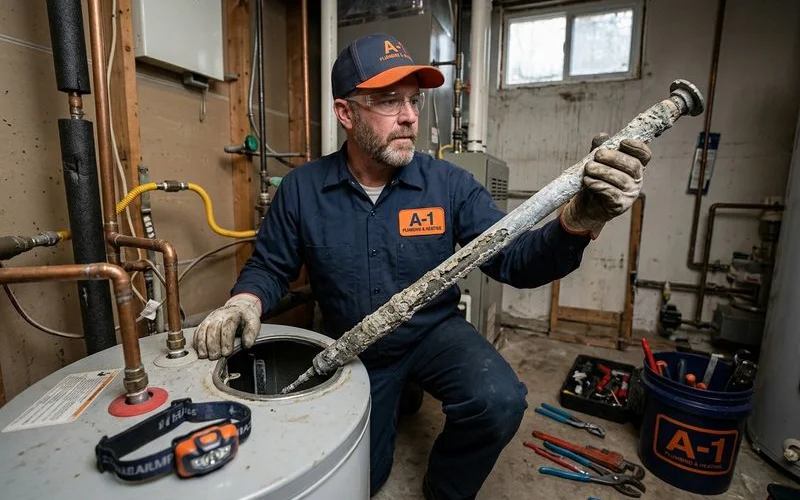
Our records indicate that replacing a $50 to $150 anode rod can prevent a $2,500 emergency tank replacement. The difference between a proactive swap and a flooded basement is often just a quick visual inspection.
Tankless descaling
Tankless water heaters in Arvada demand an annual descaling procedure to survive. This involves pumping a dedicated descaling solution or white vinegar through the heat exchanger for about 45 minutes to dissolve mineral buildup.
Skipping this vital step on a tankless unit restricts water flow and forces the system to overheat. Most tankless models are designed to last 15 to 20 years. We have seen neglected heat exchangers fail in less than six years, and manufacturers will instantly void the warranty if scale damage is present.
Whole-house water softener
A water softener physically removes calcium and magnesium from the water before it ever reaches your heater. This is the most thorough solution and actively protects your fixtures, dishwasher, and washing machine.
Softeners represent a larger upfront investment, but they completely eliminate the root cause of the scale problem.
| Solution | Frequency | Primary Benefit |
|---|---|---|
| Tank Flushing | Annually | Removes loose sediment, restores capacity |
| Anode Rod Swap | Every 3-5 Years | Stops internal tank rust and corrosion |
| Descaling | Annually | Protects tankless heat exchangers |
| Water Softener | Daily (Automated) | Prevents scale formation entirely |
When sediment damage is past the point of return
Sediment damage eventually becomes permanent if a heater is neglected for too long in hard water. Annual flushing easily prevents most mineral problems when performed consistently from day one.
You will likely see irreversible damage if a tank has gone five or more years without a flush. Our plumbers frequently encounter units where the drain valve is completely clogged solid with calcified rock.
You should start looking at new models if you observe the following signs:
- Tank rust and visible external corrosion that flushing cannot reverse
- Burned-out heating elements that need constant replacement
- Permanent efficiency loss that keeps your energy bills artificially high
- Visible rust flakes floating in your hot water supply
At that point, the conversation shifts strictly from maintenance to a replacement strategy. See our water heater repair vs. replacement guide for the data you need to make that decision.
A simple plan for Arvada homeowners dealing with hard water water heater sediment
Managing hard water water heater sediment requires consistency rather than expensive interventions. You can protect your investment by following a basic, predictable schedule. Our customers who follow this plan rarely experience unexpected cold showers.
- Flush the tank every year. This simple drain is the cheapest insurance you can buy against premature failure.
- Check the anode rod every 3 years. You must replace it when the core wire becomes visible or it looks heavily pitted.
- Descale tankless units yearly. This process is explicitly required to keep your manufacturer warranty valid.
- Consider a water softener. This upgrade makes sense if you also want to protect your expensive plumbing fixtures and appliances.
Done routinely, hard water water heater sediment becomes a minor managed condition rather than a slow death sentence for your heater. We strongly recommend adding a calendar reminder right now to schedule your next flush.