
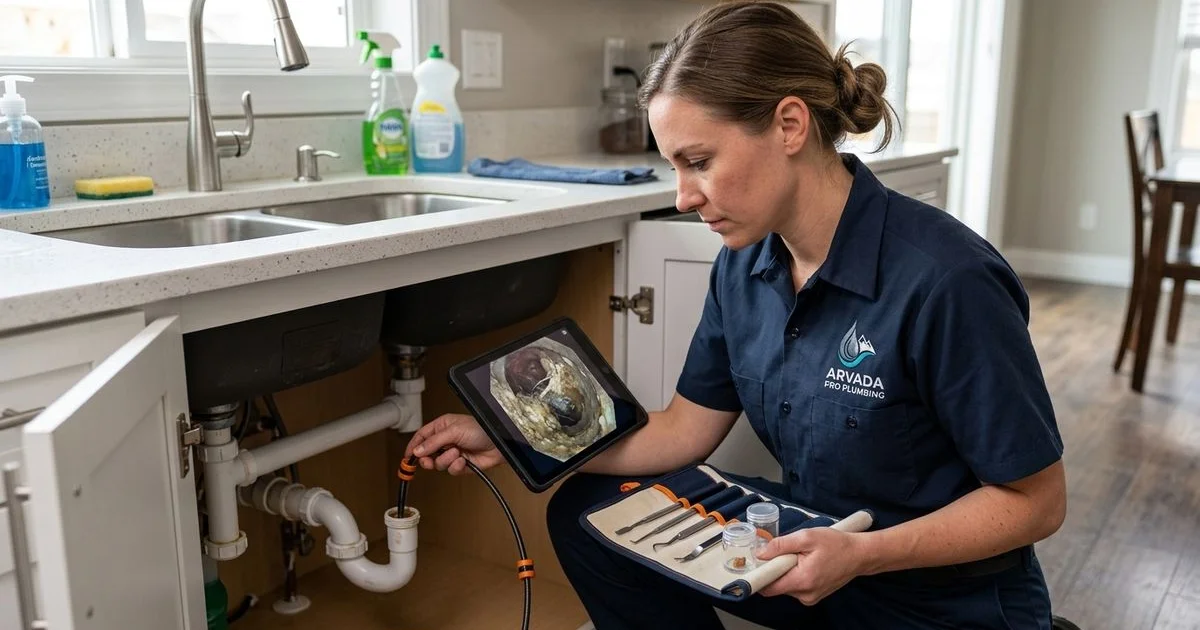
We hear the same frustration from customers every week. A homeowner clears a sluggish kitchen sink, only to watch the drain back up again a month later.
You are probably asking yourself why does my drain keep clogging after you just fixed it.
Standard drain cleaning solutions simply miss the deeper problem hidden inside the pipe. Our team at Arvada Pro Plumbing knows that a recurring issue requires a different diagnostic approach. Let’s look at the data behind these stubborn blockages and explore a few practical ways to resolve them permanently.
Recurring clogs are a symptom, not the disease
A one-time clog is usually random, but a recurring drain clog means something inside your pipe is actively catching debris.
We see this pattern constantly in older neighborhoods. Snaking a line often just punches a narrow two-inch hole through the sludge. The remaining coating quickly catches new food scraps or hair.
This causes the exact same backup to return within weeks. Our technicians find that homes built before 1980 often have cast iron pipes that degrade and snag waste.
Here are the secondary symptoms that point to a deeper structural issue:
- Water drains slowly across multiple sinks simultaneously.
- Foul sewer gas odors escape from the fixture trap.
- Gurgling noises occur when you run the washing machine.
- Puddles form around the base of the lowest toilet.
You need to identify the exact cause to determine the right repair. This prevents you from wasting money on temporary fixes.
Suspect 1: Grease buildup
Grease is the most common cause of recurring kitchen clogs because it solidifies in cold underground pipes. Hot water and dish soap merely push the fats a few feet down the line.
We frequently pull thick grease logs out of residential kitchen lines. The fats cool rapidly once they reach the buried sections of your plumbing. They stick to the walls and create a sticky trap for other debris.
“Snaking a grease-coated line punches a temporary hole through the blockage, but it leaves the sticky coating intact to catch tomorrow’s food scraps.”
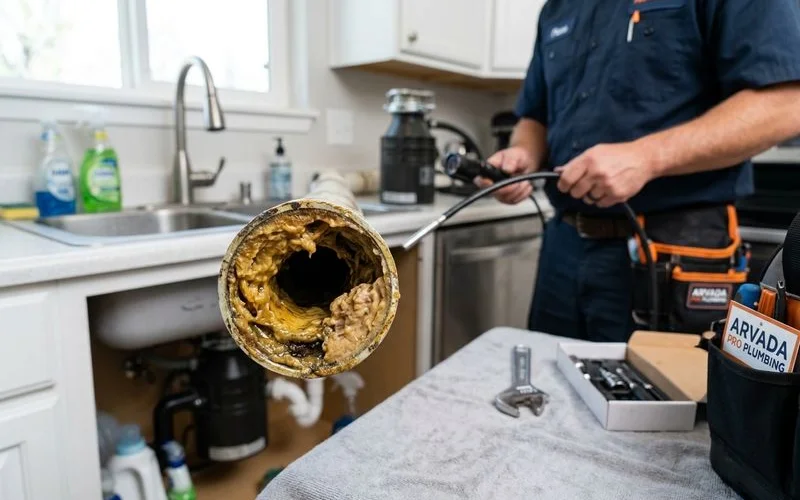
Our preferred method for removing this hardened sludge is hydro jetting. Standard cables simply push through the center of the grease block. High-pressure water scours the entire pipe interior clean.
Professional hydro jetting units typically operate between 1,500 and 4,000 PSI (pounds per square inch). For residential systems, a setting of 1,500 to 2,000 PSI is usually perfect. This pressure level effectively clears the grease without damaging older plumbing joints.
Suspect 2: Mineral scale and hard water
Hard water leaves behind severe mineral scale that narrows your drain lines and catches debris. This creates a slow, steady blockage over time.
We deal with hard water complications across the entire region. The 2026 water quality data shows that Arvada has an average water hardness of about 158 PPM (parts per million). This equals roughly 9 grains per gallon, which firmly classifies the local supply as hard water.
These dense calcium and magnesium deposits typically accumulate in three main areas:
- Water heater elements and tanks.
- The curved P-traps beneath your sinks.
- Horizontal sections of older galvanized plumbing.
Our technicians frequently see this scale buildup acting like a net for hair and soap scum. The most effective fix requires professional jetting to break apart the calcified layers. You might even need to replace a heavily corroded section of pipe in extreme cases.
Suspect 3: A sewer line issue further down
A clog that consistently returns in your lowest fixtures points directly to a main sewer line failure. This deeper issue requires immediate professional attention to prevent property damage.
We find that local blockages rarely affect multiple drains simultaneously. If your basement floor drain and downstairs toilet both back up, the main exit line is compromised by one of these major issues:
- Aggressive tree root intrusion.
- A belly or sag in the pipe holding standing water.
- A partial structural collapse of the pipe wall.
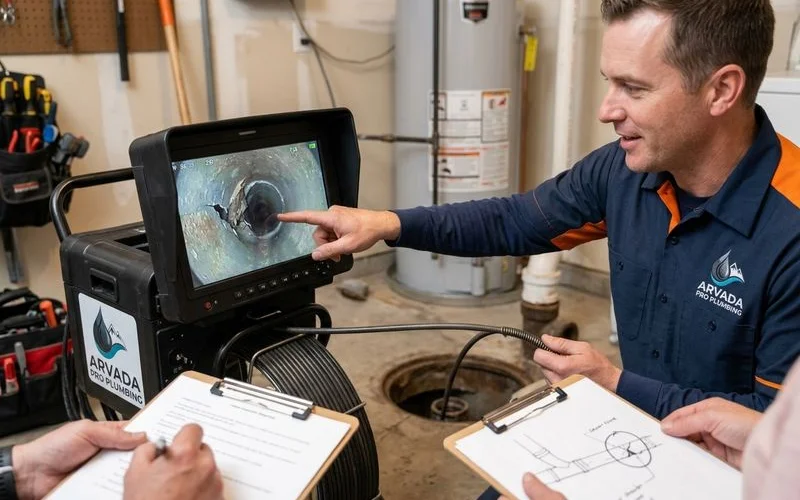
Many homes built before the 1970s still rely on original clay tile sewer pipes. Colorado’s intense freeze-thaw cycles cause the surrounding soil to shift constantly. This ground movement eventually cracks the brittle clay, creating an easy entry point for thirsty tree roots.
Our standard protocol involves running a specialized diagnostic camera, like a Rigid SeeSnake, down the main line. A live video feed eliminates the guesswork completely. You can see the exact location and severity of the root mass or collapse on the screen.
A diagnostic walk-through
Pinpointing the exact location of the backup helps determine the correct repair strategy. Answering a few quick questions about your home’s symptoms will guide your next steps.
We recommend checking a few specific details before calling a plumber. You should note how often the blockage occurs and which specific sinks or tubs are affected. Industry data shows that up to 70% of recurring localized clogs are caused by improper disposal habits, while widespread backups almost always point to underground infrastructure.
Here is a simple diagnostic guide to help you understand the problem:
| Symptom You Notice | Probable Cause | Recommended Action |
|---|---|---|
| Only one specific drain backs up again and again. | Localized grease, hair, or scale blockages. | Target the single line. |
| The clog returns within a few weeks of clearing. | Snaking failed to remove the sticky buildup. | Professional hydro jetting. |
| Multiple low-level drains slow down together. | The main sewer line is blocked or damaged. | Schedule a camera inspection. |
| You smell strong sewer gas from any drain. | A broken main line or a venting system failure. | Call for professional service immediately. |
Our experienced plumbers use these exact same questions during an initial phone consultation. Having these answers ready will speed up the troubleshooting process immensely, saving you valuable billable hours on diagnostics.
What to do this week
Stop treating the symptoms and start addressing the actual cause of the repeated backups. A proactive approach saves you from expensive emergency cleanups down the road.
We advise homeowners to ditch liquid chemical drain cleaners immediately. These harsh liquids contain sodium hydroxide or sulfuric acid that generate intense heat, which can warp modern PVC pipes. They also accelerate corrosion in older cast iron plumbing systems.
“A recurring clog is simply the plumbing system asking for help, and listening to that warning is always cheaper than dealing with a flooded basement.”
You should upgrade from basic snaking to high-pressure jetting for any grease or scale issues. The sheer volume of water will flush the restrictive coating away completely.
Our final piece of advice is to request a video inspection if you suspect a deeper issue. A clear visual diagnosis eliminates the guesswork completely.
Conclusion
If you are tired of wondering why does my drain keep clogging, it is time to get a professional diagnosis.
A permanent solution protects your property from severe water damage.
We are ready to help you clear those stubborn pipes for good. Contact our team today to schedule a thorough video inspection and resolve the issue permanently.